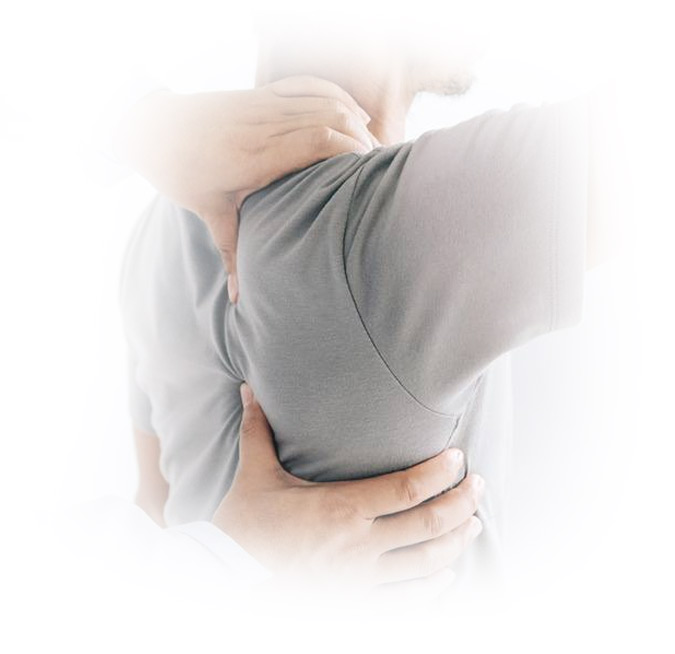
Intense shoulder joint pain can significantly impact your life, making even simple tasks a challenge. At the Orthopedic Institute of PA (OIP), we offer solutions for shoulder pain, including total, partial and reverse shoulder replacements. Together, we can help you experience pain-free living again.
4.9 stars 4.95 out of 5 (1611 reviews) About star rating
Is Shoulder Joint Replacement Surgery Right for You?
Shoulder joint replacement surgery removes damaged bone and cartilage and replaces them with prosthetic components to restore function. You may be eligible for this surgery if you have severe shoulder pain that interferes with your sleep or daily functioning, such as showering or dressing. Surgery is usually a last resort treatment, as many doctors recommend trying conservative methods — such as medication, cortisone injections or physical therapy — before a replacement.
Need specialized help?
We also care for many patients with other less common conditions.
OIP offers three forms of shoulder joint replacement options, depending on your individual needs. A surgeon will work with you to discuss your options and help determine the correct method.
Total Shoulder Replacement A total shoulder replacement involves inserting a plastic socket and a metal ball into your shoulder joint, replicating normal shoulder anatomy. This surgery is ideal for patients with intact rotator cuffs and osteoarthritis.
Partial Shoulder Replacement If you have a damaged ball — also called the humeral head — in your shoulder joint, you may be suitable for a partial shoulder replacement. This procedure only replaces the ball and leaves the rest of the joint intact.
Reverse shoulder replacement If you have a torn rotator cuff or one with severe cuff arthropathy, a surgeon may recommend a reverse shoulder replacement. This surgery reverses the usual ball-and-socket arrangement, so the metal ball attaches to the shoulder, and the socket prosthetic sits on the upper arm bone. Your body will then rely on the deltoid muscle instead of the cuff to lift your arm.
If necessary, advanced surgical solutions, including partial or full shoulder replacement, may be considered. Our team ensures patients understand their options and coverage before proceeding.
Benefits of Choosing OIP for Your Surgery
At OIP, we distinguish ourselves from general hospitals by our patient-focused approach and continuum of care. When you choose us, you can expect:
Personalized treatment plans: We understand that shoulder replacement surgery takes more than a one-size-fits-all approach. We take the time to get to know you and your goals, so we can focus on a treatment that helps you return to life, whether that’s golfing, swimming or lifting children.
Continuum of care: The OIP team guides you through every step of the replacement process, from preoperative imaging through physical therapy. We do everything under one roof, ensuring a seamless recovery plan.
State-of-the-art technology: We utilize the most advanced technology and surgical techniques for precision and accuracy. These minimally invasive approaches can lead to shorter recovery times and better patient outcomes.
Recovering From Shoulder Joint Replacement
We are passionate about the rapid recovery protocol because it can speed healing and get you back home faster. After the surgical anesthesia wears off, our team will help you start to move your shoulder again. We will briefly monitor you at our facility before allowing you to recover in the comfort of your own home.
You may have to wear a sling as your shoulder heals, but our excellent physical therapy team will help you navigate rehabilitation. During this strengthening phase, our team will work directly with your surgeon to customize your recovery plan.
Take the First Step Toward a Pain-Free Life
Relief is possible with a shoulder replacement from OIP. Schedule a consultation with our team to discuss your options today.
1. Suspicious mass or tumor a. On initial evaluation or follow up 2. Staging of known cancer 3. Suspected or known infection (septic arthritis or osteomyelitis) 4. Suspected Osteonecrosis 5. Evaluation of Rheumatoid Arthritis or other autoimmune diseases 6. Evaluation of Post-op Complications a. Infection, delayed union, other 7. Suspected fracture with prior imaging non-diagnostic 8. Abnormal bones scan with non-diagnostic Xray 9. Significant injury with suspected ligament, cartilage, tendon, nerve or bone injury with non-diagnostic prior imaging a. Suspected massive rotator cuff tear 10. Evaluation of pain or more minor injury with initial imaging non-diagnostic: a. Pain lasting 3 months or greater b. Failed conservative therapy: Must include each one: i. Rest: modified activities or assistive devices/rigid splints or braces ii. Ice or heat iii. Medications and/or injections iv. Physical therapy or a physician directed home exercise program or chiropractic care 1. Document instructions given 2. Document compliance and results 3. Document duration and dates
MRI Spine
Preauthorization Documentation Criteria
1. Tumor, masses, or cancer: suspected or known 2. Neurological Deficits 3. Trauma or acute injury a. With neurological deficits b. With progressive symptoms during conservative treatment 4. Infection: known or suspected 5. Inflammation: Ankylosing Spondylitis 6. Pre-op Evaluation 7. Post-op Complications 8. Acute or Chronic Axial or radicular pain a. Pain lasting 6 weeks or greater b. ADLs must be affected c. Progressive neurological deficit or an abnormal EMG i. Must document specific dermatome, muscle weakness, reflex abnormalities d. Failed conservative therapy: Must include each one: i. Rest: modified activities or bracing ii. Ice or heat iii. Medications, acupuncture or stimulators 1. Specific name of medication start date and duration and results iv. Epidurals or other injections (not trigger point injections) v. Physical therapy or a physician directed home exercise program or chiropractic care 1. Document instructions given 2. Document compliance and results 3. Document duration and dates
1. Musculoskeletal Pelvic MRI: a. Mass or tumor b. Significant injury to rule out fracture or other injury c. Osteonecrosis of hips d. Sacroiliitis e. Sacroiliac joint dysfunction f. Pain lasting 3 months or greater g. Failed conservative therapy: Must include each one: i. Rest: modified activities or assistive devices/rigid splints or braces ii. Ice or heat iii. Medications and/or injections iv. Physical therapy or a physician directed home exercise program or chiropractic care 1. Document instructions given 2. Document compliance and results 3. Document duration h. Persistent Pain not responsive to 4 weeks of conservative treatment
2. Prostate Cancer Evaluation, follow up, and surveillance
3. Mass or Tumors
4. Cancer detection, staging, or surveillance a. 3, 6, or 12 month follow up
5. Infection: a. Appendicitis b. Diverticulitis not responding to conservative care c. Inflammatory bowel disease d. Abscess suspected e. Fistula f. Abnormal fluid collection
1. Suspicious Mass or Tumor a. On initial evaluation or follow up 2. Staging of known Cancer 3. Known or suspected infection 4. Suspected Osteonecrosis or Legg-Calve-Perthes Disease 5. Suspected SCFE, tarsal coaltion 6. Evaluation of Post-op complication: a. Infection, delayed union, other 7. Suspected fracture with prior imaging non-diagnostic 8. Abnormal bone scan with non-diagnostic xray 9. Significant injury with suspected ligament, cartilage, or bone injury 10. Evaluation of pain or more minor injury with initial imaging negative: a. Pain lasting 3 months or greater b. Failed conservative therapy: Must include each one: i. Rest: modified activities or assistive devices/rigid splints or braces ii. Ice or heat iii. Medications and/or injections iv. Physical therapy or a physician directed home exercise program orchiropractic care 1. Document instructions given 2. Document compliance and results 3. Document duration
1. Mediastinal or hilar mass 2. Myasthenia gravis with suspected thymoma 3. Brachial Plexus Dysfunction 4. Thoracic/Thoracoabdominal aneurysm 5. Suspected or confirmed Congenital Heart Disease 6. Thoracic Outlet Syndrome
MRI Brain
Preauthorization Documentation Criteria
1. Suspected or known MS 2. Seizure disorder, known or suspected new or refractory 3. Suspected Parkinson’s disorder 4. Neurological symptoms or deficits a. Acute, new or fluctuating deficits 5. Mental status changes 6. Trauma to the head with neurological changes, vomiting, headache 7. Evaluation of headaches a. Chronic with change in pattern/character b. Sudden onset severe headache c. New onset headache in pregnancy 8. Suspected brain tumor or cancer 9. Known or suspected stroke 10. Suspected Infection 11. Suspected Congenital abnormality 12. New onset tinnitus or vertigo associated with visual changes
MRI Abdomen and MRCP
Preauthorization Documentation Criteria
MRI 1. Suspicious Mass or Tumor 2. Surveillance of Mass, Tumor, or Cancer a. 3, 6, 12 month follow up 3. Suspected infection: a. Appendicitis b. Peritonitis c. Pancreatitis d. Inflammatory bowel disease e. Cholecystitis f. Abscess g. Fistula h. Hepatitis C 4. Preoperative Evaluation 5. Post-op complication
MRCP 1. Suspected Congenital Abnormality 2. Chronic pancreatitis or related complications 3. Biliary tree symptoms 4. Pre-op Evaluation 5. Post-op complication or surveillance 6. Inconclusive abnormalities identified on other imaging